Note 02 — The reapplication problem no rich cream solves
Formulation note · Updated
There is a number that decides whether a hand cream works for you, and it is not on the label. It is how many times a day you will actually reapply it. For a frequent washer, that number is what separates a cream that helps from one that stays in a drawer — and it is the number most hand creams are designed to ignore.
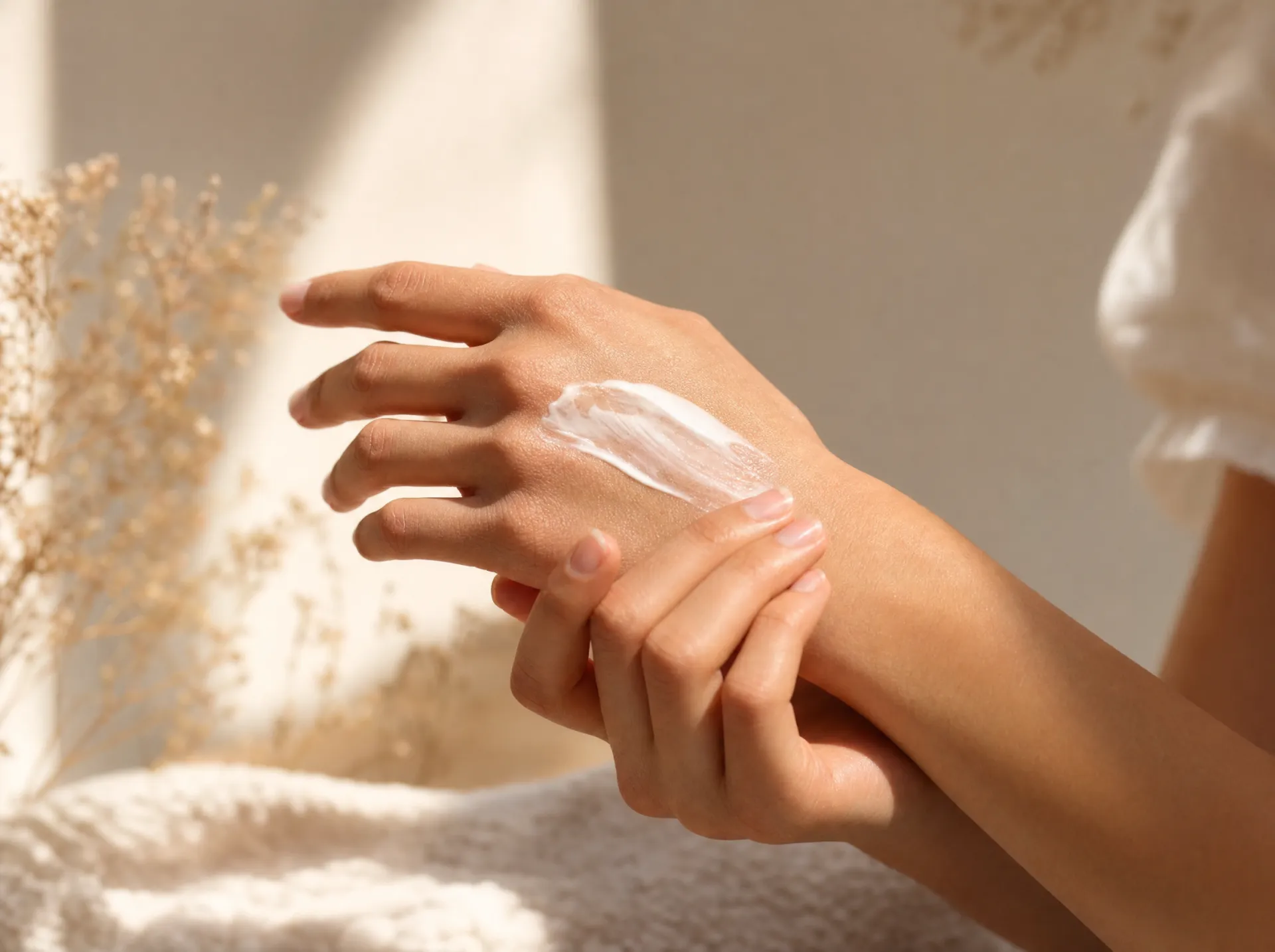
/Washing resets the clock
Every hand wash removes water and some of the skin's natural lipids along with the soap. A single application of any cream — rich or light — is partly undone by the next wash. So the useful question is not how much a cream moisturises in one go, but how much it delivers across a whole day of washing.
Think of it like watering a plant on a hot day. One big flood in the morning runs off and is gone by noon. Small, regular top-ups keep the soil evenly damp. Frequently-washed skin behaves the same way: it does far better with steady, light replenishment than with one heavy dose it cannot hold on to.
/The maths of cumulative moisturization
Here is the counterintuitive part. A heavy balm may moisturise more per application, but you realistically apply it once or twice a day. A fast-absorbing cream moisturises a little less per application, but you can reapply it after every wash — ten or more times a day. Add it up across a shift and the light cream you actually reach for usually wins.
One heavy dose vs. many light ones
- 01A rich balm: high moisturisation per use, but realistically 1–2 uses a day.
- 02A fast-absorbing cream: moderate per use, but 10+ uses a day is realistic.
- 03Across a full shift, frequent light applications usually add up to more total care.
- 04The cream you admire and avoid delivers exactly zero; the one you use ten times delivers all day.
/Why greasy quietly kills reapplication
The reason people don't reapply a rich cream during the workday is friction — literal and practical. A slick film means you can't immediately grab a phone, a keyboard, a patient chart, or a knife. So you wait, and waiting means skipping. Every greasy application is a silent vote against the next one.
A cream that finishes matte in seconds removes that friction entirely. You apply, you carry on, you apply again after the next wash without a second thought. That is the whole reason Handvela is built to absorb fast: not for the feel of a single application, but to make the tenth application effortless.
“Reapplication is a design problem, not a discipline problem.”
/A realistic routine for a washing-heavy day
- Keep the tube where the washing happens — by the sink, in a scrubs pocket, on the station — not in a bag across the room.
- Reapply after each wash while your hands are still barely damp; a light cream spreads and absorbs faster that way.
- You do not need much: a small amount that disappears beats a thick layer you have to work in.
- If your hands are very dry, add a rich occlusive balm at night — that is the one job a fast-absorbing cream is not built for.
Frequently asked
How often should I really reapply hand cream?
A practical rule for frequent washers is after every wash. Because each wash strips water and lipids, reapplying often is what keeps hands comfortable — and it is only realistic with a light, fast-absorbing, non-greasy cream.
Isn't a richer cream just better value since I use less?
Not for this use case. Per single application a rich cream may moisturise more, but for someone washing their hands all day a light cream reapplied ten times usually delivers more total moisturisation than a heavy one applied once or twice.
Will reapplying that often irritate my skin?
A well-formulated, fragrance-free cream is designed to be reapplied frequently. If you have sensitive or reactive skin, patch-test first, and if any product causes irritation, stop and check with a professional.
Note: Handvela is a cosmetic hand cream, not a medical product, and makes no medical claims. If your hands are cracked or you have a skin condition, patch-test any new product and check with a healthcare professional.